
Originality · Turnitin · AI writing
Originality & reports
A similarity percentage on its own is close to meaningless. We hand over the report with the draft and walk through what each match actually is.
Turnitin
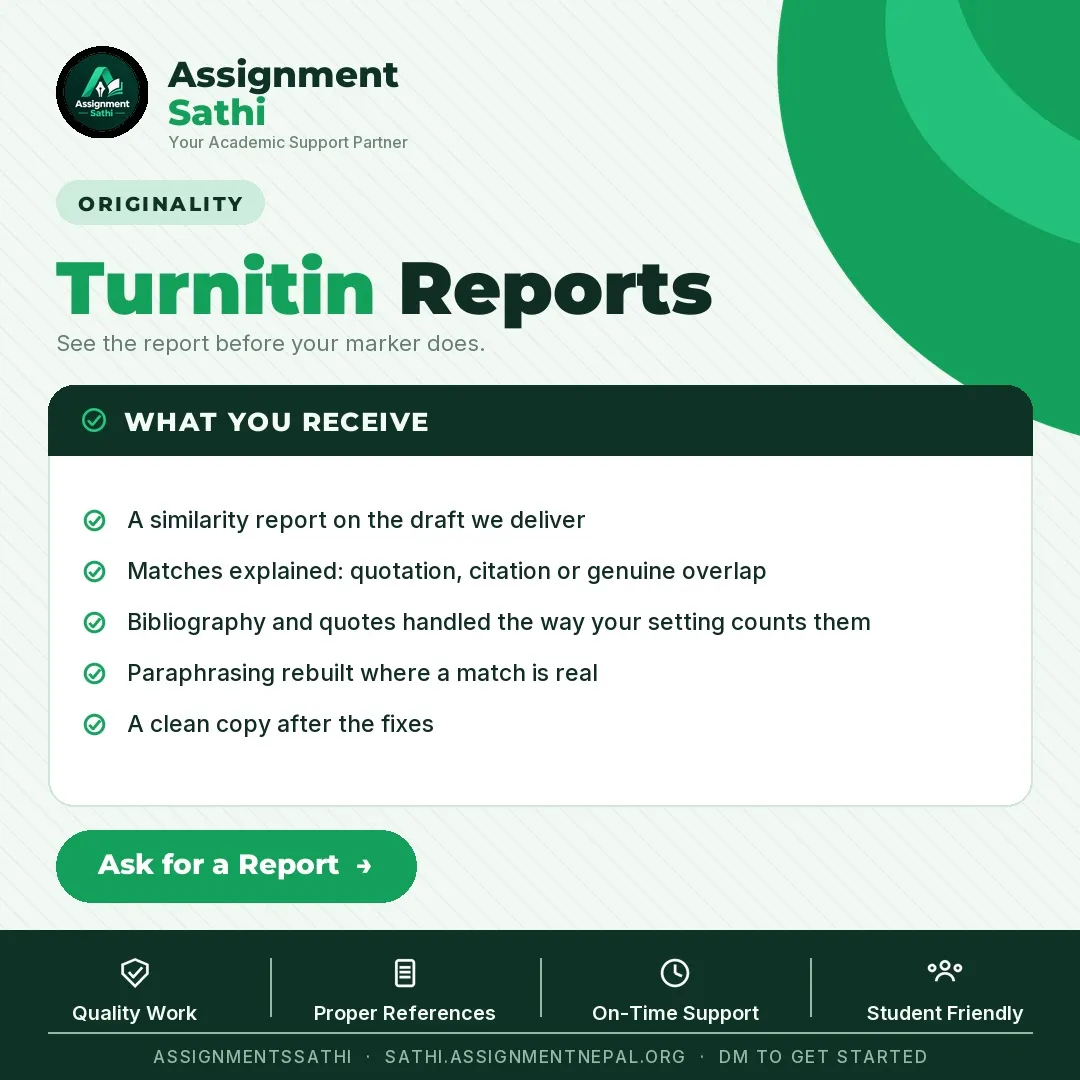
See the report before your marker does
We run a similarity check on the draft we deliver, so anything a marker's setting would flag is already seen — and already answered for.
- A similarity report on the draft we deliver
- Matches explained: quotation, citation or genuine overlap
- Bibliography and quotes handled the way your setting counts them
- Paraphrasing rebuilt where a match is real
- A clean copy after the fixes
AI writing
Human-written, and evidenced
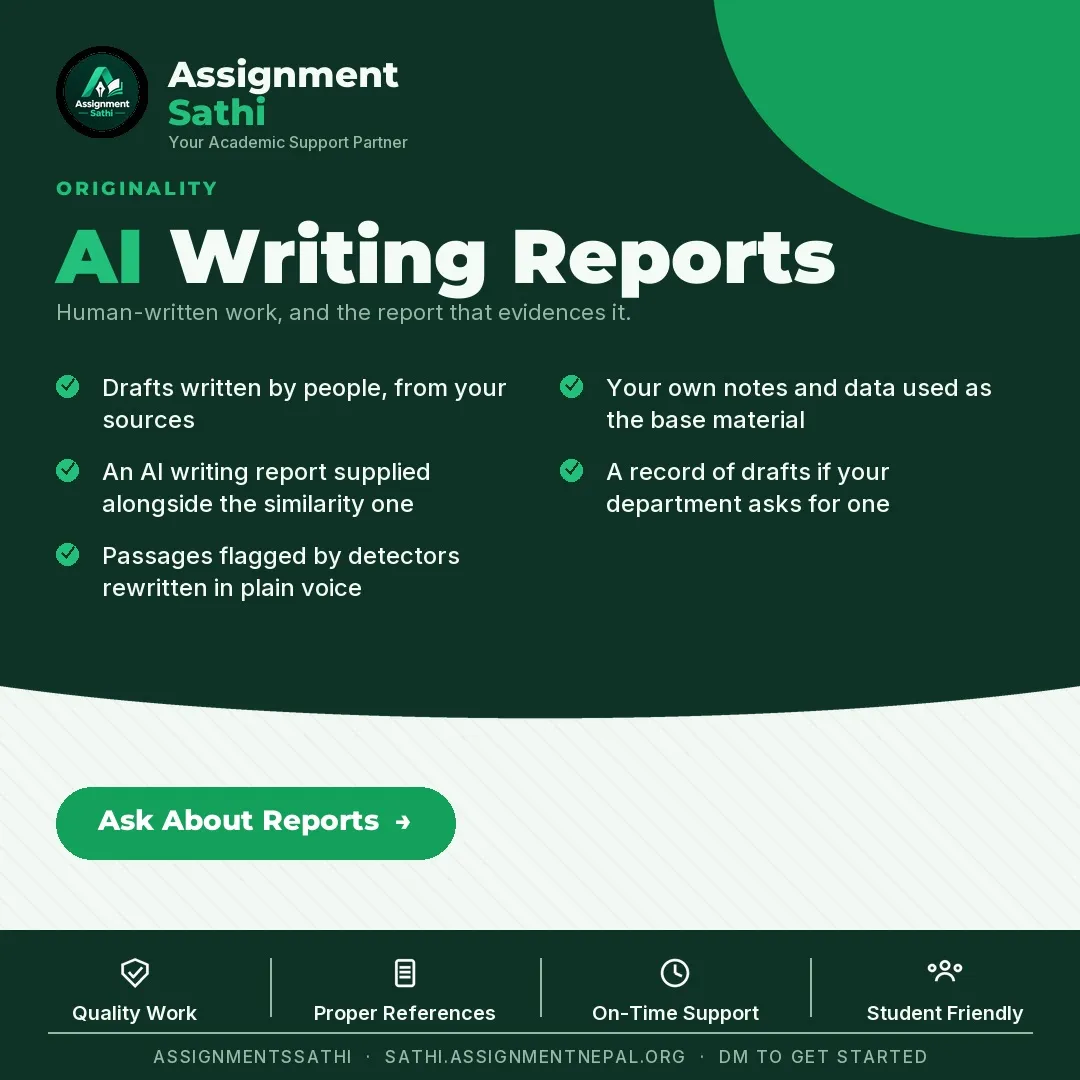
AI detectors are imprecise in both directions, and a false flag is still your problem to answer. Two things protect you: work that was genuinely written by a person from your own material, and a record of the process.
- Drafts written by people, from your sources
- An AI writing report supplied alongside the similarity one
- Passages flagged by detectors rewritten in plain voice
- A record of drafts if your department asks for one
What a score actually means
| Scenario | Why it matters |
|---|---|
| 22% — all correctly quoted method text | Fine. Matches inside quoted sections are not plagiarism. |
| 9% — concentrated in a single uncited paragraph | Not fine, even though the number is low. That paragraph gets rebuilt. |
| 60%+ across the document | A composed document, not an original one. We never deliver this. |
| Match you genuinely meant | Paraphrasing rewritten in your own voice — one of the included revisions. |
The number is not the verdict. The report is read as a whole: what the matches are, where they sit, and whether the writing that surrounds them is yours.
Related reading
From the library
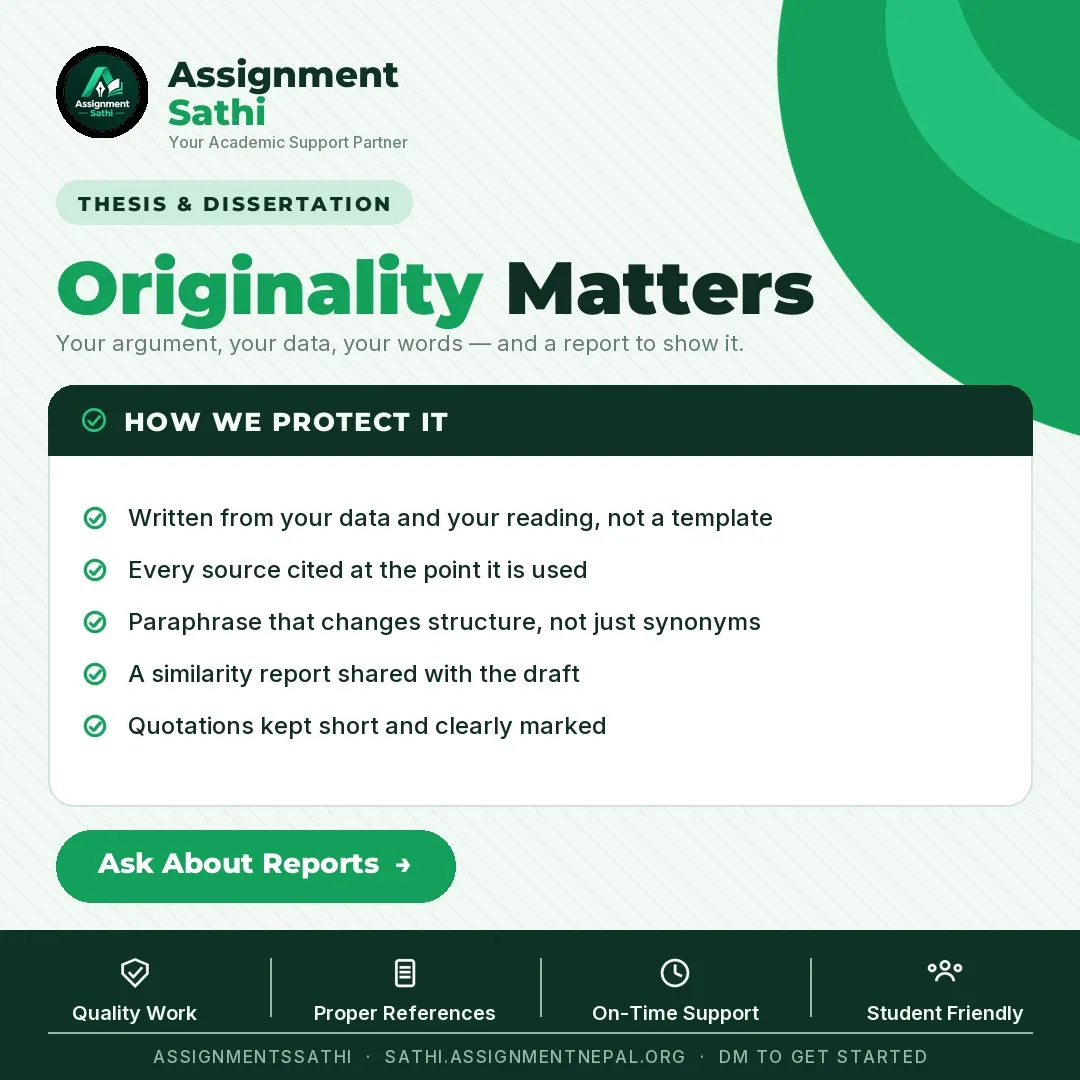
Thesis & Dissertation
Originality Matters
Your argument, your data, your words — and a report to show it.
Read more →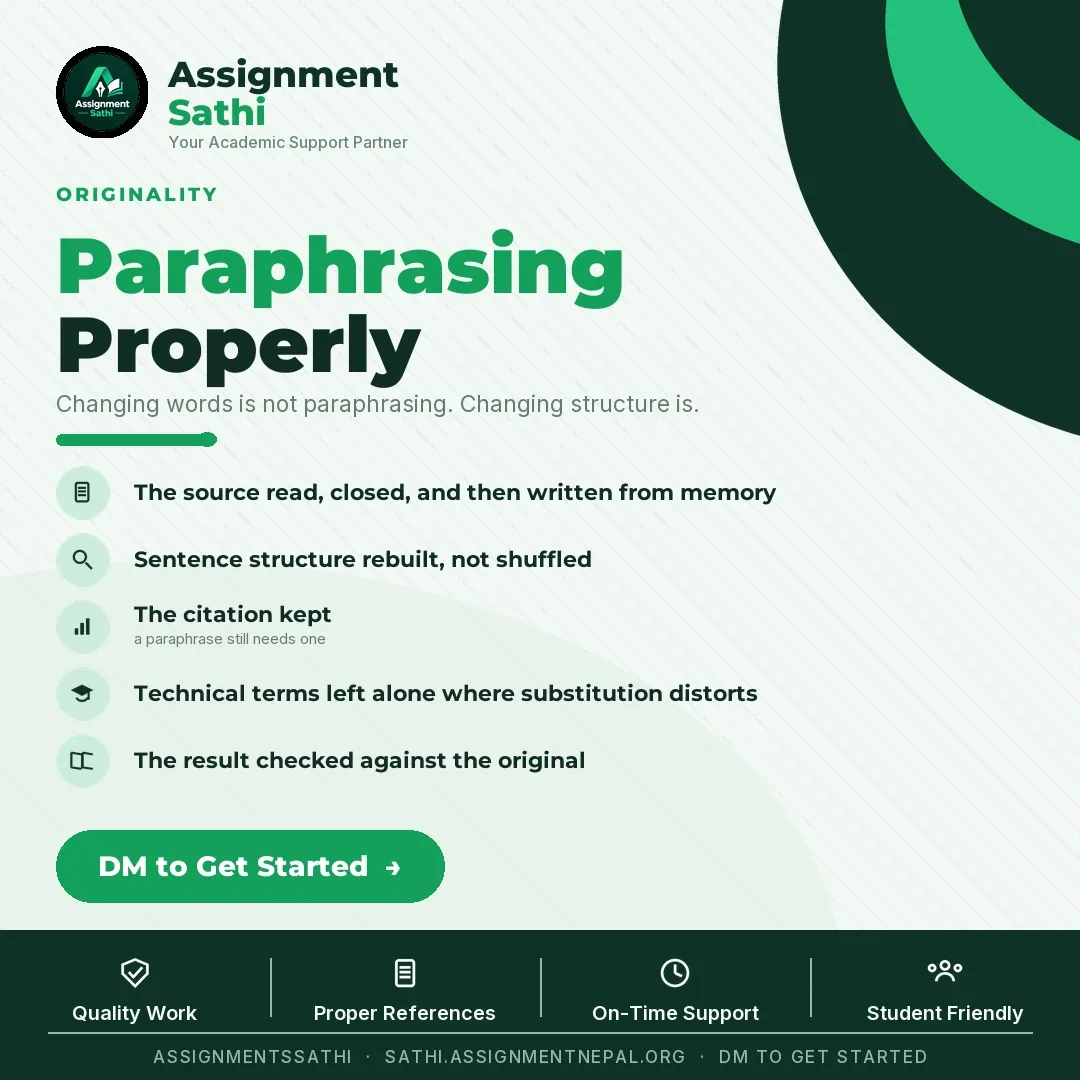
Originality
Paraphrasing Properly
Changing words is not paraphrasing. Changing structure is.
Read more →